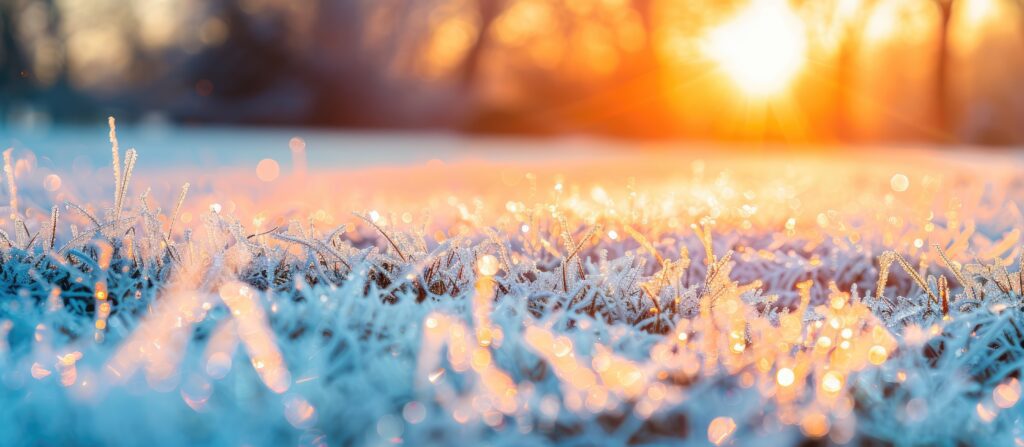

Minnesota winters are tough – not just on people but on lawns as well. While your grass may look dormant under snow and ice, winter can cause real damage that shows up once spring arrives. Knowing what to watch for (and how to protect your lawn!) can make a big difference in how healthy your grass will be when spring finally arrives.
At B&B Hoffman Sod Farms, we grow sod specifically for the cold Minnesota climate, and we know firsthand how winter stress can affect lawns all across the state. Here’s what homeowners should know to protect their lawns during the coldest months.
Common Types of Winter Lawn Damage in Minnesota
❄️ Snow Mold
Snow mold is one of the most common winter lawn issues in Minnesota. It appears as circular patches of gray or pinkish grass after the snow melts – especially in areas where snow piled up and lingered. (Think close to the street where shovels and snow plows dumped heaps of snow.)
Snow Mold Causes:
- Heavy snow cover for long periods of time (unavoidable in Minnesota most winters!)
- Excess thatch
- Skipping end of season lawn care such as missing fall fertilizer or letting grass get too long
🌡️ Freeze-Thaw Damage
Minnesota’s frequent freeze-thaw cycles can stress your grass. When soil repeatedly freezes and thaws, it can push grass roots upward, exposing them to cold air and drying out the plant. This often leads to thinning turf, weak root systems, and delayed green-up in the spring.
🧊 Ice Encapsulation
When melting snow refreezes, thick ice layers can form over your lawn. Like all plants, grass needs oxygen, a prolonged ice cover can suffocate turf, leading to dead patches once the ice finally melts.
🐾 Winter Foot Traffic Damage
Walking, playing, or driving equipment over frozen or snow-covered grass can crush dormant grass blades and compact the soil. This damage often doesn’t show until spring when grass struggles to recover.
How to Protect Your Lawn During Winter
✅ Mow to the Right Hight Right Before the Snow Flies
Before winter sets in, mow your lawn slightly shorter than normal (around 2 – 2.5 inches). This helps prevent snow mold while still protecting the grass.
✅ Rake Leaves and Debris Away From Your Lawn
Leaves left on the lawn trap moisture and encourage mold growth. A clean lawn doesn’t just look nice, it’s necessary and one of the easiest ways to reduce damage.
✅ Avoid Winter Traffic
Limit foot traffic on frozen lawns. Create designated walk/play areas if needed to avoid compacting the soil and damaging the grass under the snow.
✅ Manage Snow Piles Carefully
Avoid piling snow repeatedly in the same areas, especially along driveways, sidewalks, and streetside curbs. Deep, long lasting snow increases the risk of snow mold and suffocating the grass.
✅ Choose Grass Built For Minnesota Winters
One of the best ways to protect your lawn long-term is starting with the right grass. High-quality, Minnesota-grown sod is bred to withstand harsh winters, freeze-thaw cycles, and snow cover better than other turf. At B&B Hoffman Sod Farms, our premium Kentucky bluegrass sod is grown locally and is durable, tolerant to cold, and builds strong roots to give your lawn a better chance to bounce back in spring.
Prepare Now for a Healthier Spring Lawn
Winter doesn’t have to mean lawn damage! Taking steps now helps protect your investment and sets the stage for a lush, green lawn once Minnesota warms up again. (We promise, it will eventually be warm again! If winter has taken a toll on your lawn or you’re planning ahead for spring, B&B Hoffman Sod Farms is here to help with premium, Minnesota-friendly sod, seed, and fertilizers and expert guidance you can rely on. Contact us today at 763-434-6572 to learn more about our sod and how to give your lawn the strongest possible start in the spring.